RumptyCloud is building renewable-powered cloud infrastructure in Lagos — a sustainable, eco-friendly cloud for Nigeria and builders across Africa. Today we estimate around 90% renewable energy. The plan is 99.9%.
Compute shouldn't just become more accessible. We think it should become more sustainable too.
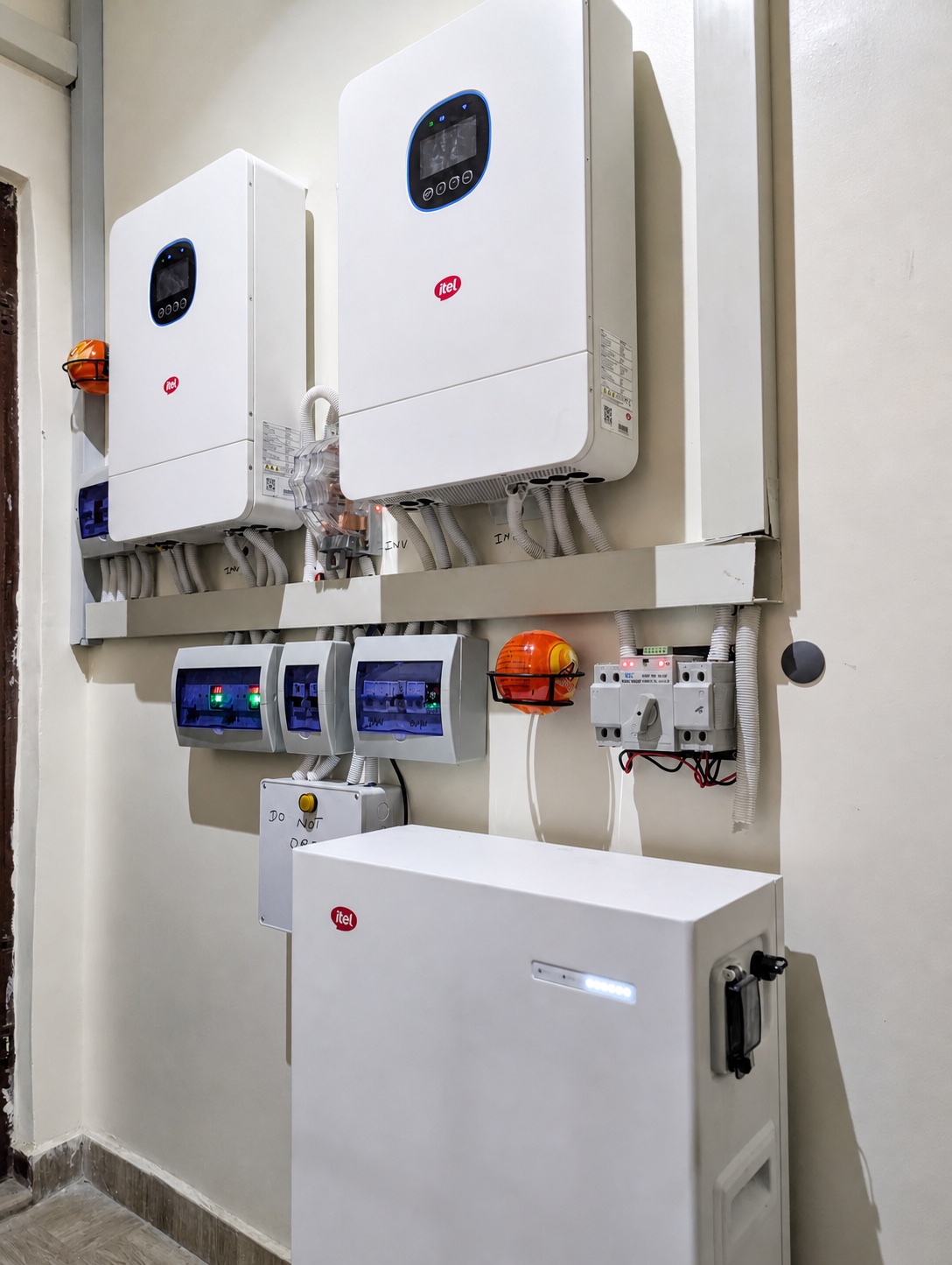
On-site power system · Lagos
Solar inverters and battery storage supporting our infrastructure.
Current energy figures
Estimated renewable energy share
~90%
Solar panels
24620 W monocrystalline · ~14.9 kWp
Battery storage
37 kWh
Renewable energy generated
450+ kWh
Infrastructure location
Lagos, Nigeria
Renewable energy share is currently an estimate based on typical operating conditions. We are working toward more detailed real-time energy monitoring.
Building a greener cloud from Lagos.
Cloud infrastructure consumes energy. As AI and computing demand continue to grow, the question isn't only where that compute runs, but how we power it.
We're building RumptyCloud with renewable energy as a core part of the infrastructure from the beginning.
Our Lagos cloud infrastructure combines on-site solar generation, battery storage, and conventional backup power to keep workloads running while reducing our dependence on non-renewable energy sources.
How we power the cloud
Energy from the solar array feeds the infrastructure and charges battery storage. Grid and generator capacity stay on as fallback so workloads keep running when generation is short. Today that mix is about 90% renewable. The plan is 99.9%.
Solar
Battery storage
RumptyCloud infrastructure
Customer workloads
Fallback path: Grid and generator when solar and storage are not enough.
Renewable energy comes first
24 solar panels (620 W monocrystalline each, roughly 14.9 kWp) power the infrastructure during daylight and recharge the 37 kWh battery bank. Stored solar then carries the load through quieter generation and into the night.
When solar is limited
During extended cloudy conditions or unusually high demand, the public grid may supplement solar and storage. We use grid power selectively to keep the platform available and avoid unnecessary deep battery discharge.
Emergency generator backup
A generator is available for extended outages when solar, batteries, and the public grid cannot support the infrastructure. It is an emergency fallback — we aim to keep its use limited.
What is green cloud computing?
Green cloud computing is an approach to running cloud infrastructure while reducing its environmental impact. That can include using renewable energy, improving hardware utilization, consolidating workloads through virtualization, cutting unnecessary consumption, and designing infrastructure around energy efficiency.
For RumptyCloud, that starts with energy.
Rather than treating renewable energy as something to add later, we're designing it into how our infrastructure grows. In practice that means:
On-site renewable energy generation
Battery storage so solar can cover more of the day
Virtualization and shared infrastructure instead of idle boxes
Packing workloads so hardware is actually used
Physical infrastructure operated locally in Lagos
Sustainable cloud in Africa.
The machines stay in Lagos. The account is open to builders across Africa — Kenya, Ghana, South Africa, and everywhere else on the continent.
That is what we mean by a sustainable cloud in Africa: locally operated hardware, solar-first power, not a US region with a green marketing line.
Eco-friendly here is the same plant: on-site solar, batteries, and backup only when generation is short. We use the phrase because people search it. Today that is about 90% renewable. The plan is 99.9%.
Sustainable cloud infrastructure, built from Lagos.
RumptyCloud isn't simply routing workloads to infrastructure somewhere else. We are building and operating the physical infrastructure behind the platform locally in Lagos, Nigeria.
As demand for cloud computing and AI infrastructure grows across Africa, we believe the infrastructure supporting that growth can be built locally while also being designed around more sustainable sources of energy.
The setup as it stands today, and what we're working toward next.
01
24 solar panels
On-site generation on the Lagos infrastructure.
02
37 kWh battery storage
Stored solar carries the load when the array is quiet.
03
450+ kWh generated
Renewable energy produced by the current setup.
04
~90% estimated renewable share
Typical operating mix today — estimate, not an audit.
05
Improved energy monitoring
Measuring generation and consumption more directly.
06
99.9% renewable is the plan
Grow solar and storage until almost every hour is renewable. Grid and generator stay for the last sliver.
Sustainability without the hand-waving.
We're still early, and our energy infrastructure is evolving alongside RumptyCloud.
The ~90% figure is our current estimate of the proportion of infrastructure energy supplied by solar generation, either used directly or stored in our batteries. It is based on typical operating conditions and is not yet an independently audited measurement.
The plan is 99.9% renewable: more solar and storage until almost every hour is covered, with grid and generator only for the last sliver. We are not operating there yet.
As our infrastructure grows, we want to improve how we measure and publish energy usage, renewable generation, and the energy mix powering RumptyCloud. We are working toward directly measuring generation and consumption across solar, battery, grid, and generator sources — and we will update this page as that data exists.
Africa and eco-friendly, answered plainly.
Is there a sustainable cloud in Africa?
Yes. RumptyCloud runs in Lagos, Nigeria — solar-first infrastructure for builders across Africa. Today we estimate about 90% renewable energy. The plan is 99.9%.
Where does a sustainable African cloud actually run?
On RumptyCloud infrastructure operated in Lagos. Builders in Kenya, Ghana, South Africa, and the rest of the continent can deploy. The machines stay in West Africa.
Is sustainable cloud in Africa the same as carbon-neutral?
No. Typical mix today is about 90% renewable by our estimate — not an audit. The plan is 99.9% renewable.
Can I run VMs and apps on this African cloud?
Yes. The same Lagos plant runs virtual machines, one-click apps, managed databases, buckets, Kubernetes, and AI inference.
Is there an eco-friendly cloud in Nigeria?
Yes. RumptyCloud in Lagos is an eco-friendly cloud in the honest sense: 24 solar panels, battery storage, and an estimated ~90% renewable share today. The plan is 99.9%. Grid and generator remain for fallback.
Is there an eco-friendly cloud in Africa?
Yes. The same Lagos plant serves builders across Africa. Workloads run in West Africa on solar-first infrastructure, not a US or EU data centre.
What does eco-friendly cloud hosting mean here?
On-site solar first, batteries to carry the night, and conventional backup only when generation is short. Today that is about 90% renewable. The plan is 99.9%.
Is eco-friendly the same as green or sustainable cloud?
We use those words for the same plant. Green cloud, sustainable cloud, and eco-friendly cloud on RumptyCloud all point at the Lagos solar-and-battery setup.